25.2.06

Review #16: The Strokes

The Strokes-First Impressions Of Earth
(RCA)
5 out of 10


Picture links to The Strokes' website

If it were any earlier in the millennium right now, it would be hard not to consider anything Julian Casablancas touched to be pure gold. Backed by a crew of 4 garage musicians to form a collective called The Strokes, his sharp, yet so obviously nonchalant vocals ushered the band’s 2001 debut, Is This It?, to international success and critical acclaim. Since then, legions of Converse-sporting post-punkers have held his rebel yell (or rather, rebel half-moan) to the utmost of idolatry and swoonworthiness. The legacy carried on through the band’s enjoyable follow-up, 2003’s Room On Fire. Many may be familiar with the adage “If it ain’t broke, don’t fix it.” However, The Strokes may have forgotten this fact of life while recording their third LP, First Impressions Of Earth.

Early indications of this album’s validity were undoubtedly troubling. From the revealing of the album’s self-righteous, proggy title, to the employment of David Kahne (formerly known for his work with Sublime, Sugar Ray, and Tony Bennett if that tells you anything) as the album’s primary producer (although longtime producer Gordon Raphael sticks around for a couple tracks), there was plenty bleak foreshadowing abound. Then the album’s first single, the over-produced, lyrically pretentious, bassline-swiping “Juicebox” was released; although it was still somewhat enjoyable as a pop song, it further aroused suspicion that this album would be more garish than The Strokes’ past works.

The remainder of the album mostly fails to counteract this assumption. Surprisingly, the album’s nearly constant theme of tacky pomp is not to be laid upon the producer. In fact, Kahne’s knob-twiddling actually adds a bit of resonance to the album. The real problem lies within the band’s newfound powder-puff approach to songwriting and recording. If the band were to keep their past rough-n-tumble production methods, the album’s most utterly goofy songs would decrease in musical value at least tenfold.

The most apparent change in the Strokes’ music here is the exertion of real, genuine effort on behalf of Casablancas. Previously known for effortlessly delivering perfect vocals, he seems to all of a sudden get a kick out of straining his vocal chords and exploiting his daunting lack of range. Shockingly, in the role of blind dart player, Julian nails a bull’s eye using this technique on the album’s spectacular opener, “You Only Live Once”. For the verses, Casablancas plays the wise man, speaking as if teaching a child the basic lessons of life, as the band maintains a tight, razor-sharp composition until the “chorus”, per se, when the instrumentals unravel into elastic chord progressions as Casablancas tears up his vocal chords. Unbridled energy is shown throughout this track that is so well utilized that it makes this ditty impossible to hate. However, other times Julian’s not so lucky. On “Vision Of Division”, his unnecessary screaming evokes pain while the band fruitlessly shreds without any feasible tune in mind. During the blah-fest that is “Ize Of The World”, he tries to get excessively nasal, and is apparently so bored by this motif that he decides to entertain himself by spontaneously working his way up the musical scale in the middle of the song, which essentially grabs the listener’s ear and twists it till Julian decides he wants to stop the tomfoolery. He even decides to try a stupid accent vaguely resembling Irish on “15 Minutes”. It’s hard to imagine Julian Casablancas trying to outdo himself and failing, but here it is on this album.

Throughout the entire album, the band seems to jump back and forth between boring mush and loopy ambitiousness. “Ask Me Anything” is the Cinderella story from the latter side. Containing no instrumentation whatsoever aside from a Casio-like cello, it wears the appearance of a ballad; when rather it’s songwriters Casablancas and guitarist Nick Valensi letting their hair down and writing a quirky set of unrelated one-liners. The sound of the lead singer muttering “Don’t be a coconut/God is trying to talk to you” and the complete dumping of the efforts of 4/5ths of the band is a measure so drastic it deserves truckloads of recognition. On the flipside, faux pop-metal anthem “Heart In A Cage” and monotonous foot-stomper “On The Other Side” equally plod and stumble like a mopey wallflower at a frat party. In rebuttal to that rebuttal, “Razorblade” shocks by actually implementing elements of both previous albums. Room On Fire is demonstrated by a catchy riff cranked out by a synth-like guitar a’ la “12:51”, and Is This It? is characterized by playful, bar-hopper lyrics.

All in all, The Strokes inevitably fail at eclecticism. Although many bands sustain long careers via fruitful musical development, experimentation, and growth, The Strokes gained fast-track success through an infectious sound and quickly ruled the post-punk roost. Either they can return to taking bold strides through their domain and continue to be one of music’s foremost groups, or they can keep tooling around like in First Impressions Of Earth and end up spending the rest of their career making shaky, feeble music. Is this it? Let’s all hope it isn’t.

Key Tracks: “You Only Live Once”, “Razorblade”, “Ask Me Anything”

29.1.06

Review #15: Tarkio

Note: Here we have the UO debut of miss Courtney Coulombe; who, you must admit, has done extraordinarily well on this review, especially for a first-timer. Welcome to the (albeit small) Useless Opinions family, Courtney!


Tarkio-Omnibus
(Kill Rock Stars)
5 out of 10

To his fans, Colin Meloy is the nasally-voiced front-man of the Decemberists. He is a man not afraid to adorn himself in the garb of a vengeful mariner, a wily model-UN ambassador, or an omnipotent fortune-teller, nor is he afraid to tell whimsical tales of cattle raids, peasants, odalisques, and royalty. He is the camber-pop revolutionary, who has captured the hearts of many. But before his days of joining up with the “Youth and Beauty Brigade,” Meloy was a college student with minor music aspirations. From those aspirations, Meloy along with Gibson Hartwell (guitar and banjo), Louis Stein (bass), and Brian Collins (percussion) formed Tarkio: a college band based in the Missoula, Montana area, which soon became the biggest rage of the Montana college rock scene.

Nearly a decade after they were recorded, Kill Rock Stars has reissued the entire catalog of Tarkio songs in a single compilation, appropriately titled: Omnibus. The songs themselves show the early working of Meloy’s lyrical genius that would later be thrust forward into the Decemberists. Despite this, Decemberists fans should not expect cheery songs of chimney sweeps, or young Spanish princesses. Many of the songs found on Omnibus lack the musical creativity that Meloy is best known for. The album all-together lacks direction. This could be because Omnibus is a compilation album, but none of the songs are consistent in musicality or even genre. One minute it’s the very relaxed and folk-inspired “Keeping Me Awake”, a few songs later it’s Beatlesesque (circa Rubber Soul) 60’s keyboard jam “Neapolitan Bridesmaid”, encouraging the listener to get up and dance like a cage dancer at Whiskey A Go-Go. A little later some songs even resort to the melodies of elevator music, and some even sounding like Death Cab For Cutie should be playing them. The fluctuation in genre can be a bit arduous at times, but it’s interesting to see the different lengths of musical experimentation the band went through trying to find a sound of their own.

One can overlook the lack of genre consistency but the fact that many of the songs are lacking an impressive use of language can be a bit of a disappointment. In order to listen to this album you don’t need to have that cumbersome tome of a dictionary by your side. The wording is simplistic; the common man off the street can understand every word sung in this compilation, a drastic swing for Decemberists fans that were expecting to increase their vocabulary by another 50 words. One need not worry too much, there are a few gems such as Brigadoon and hackneyed, but that’s all the learning the listener will get out of this album.

Not only is Omnibus lacking creative language, it also lacks concept. Many are used to expecting a good session of story telling from the previously heard works of Meloy; however, these songs are very pedestrian. Story telling was clearly not thought of in Mr. Meloy’s mind when he sat down to write these songs. They’re very normal. There’s nothing special that attracts the listener. There were two brief shining moments, which were preludes to future Decemberists’ songs. The first of which is a song familiar to the hardcore Decemberist fan. “My Mother Was A Chinese Trapeze Artist” appears on Omnibus at its earliest workings. The song still tells the tale of a boy born of a circus act mother and a Russian spy father; it still has, for the most part, the same music. The only thing that makes this song worse is the electric guitar part. Sadly it was shoddily played and sounds like Colin got a garage band together three minutes before hitting up the recording studio. The true gem of this album is hidden in the middle of the second disc.

“Tristan and Iseult” is by far the most promising track on this whole compilation. It has the musicality, the language, and the story that makes it the song closest to the future works of Meloy. The song tells a story of two young lovers who’s relationship is slowly on the decline as they go out for a film and ice cream. The guitar part is played out by a soft acoustic, and the lyrics are welcoming and adorable. Anyone would love them.

For hardcore Colin Meloy fans this will be a welcome addition to their collection; however, I wouldn’t suggest it for the lighter Decemberists fan. It was too much of a disappointment. A noble and impressive collection for a college band, but still a disappointment after hearing the wonder of what Colin Meloy can really create.

-Courtney Coulombe (Useless Opinions contributor)

Key Tracks: “Tristan and Iseult”, “Devils Elbow”, “Keeping Me Awake”, “Eva Luna”

24.1.06

The Good, The Bad, and the Meh 2005

BEST ALBUMS OF 2005

ALBUM OF THE YEAR

Aqueduct-I Sold Gold

2. Graham Coxon-Happiness In Magazines

3. The Decemberists-Picaresque
4. Of Montreal-The Sunlandic Twins
5. The Go! Team- Thunder, Lightning, Strike
6. My Morning Jacket-Z
7. Kanye West-Late Registration
8. Sigur Rós-Takk
9. Dangerdoom-The Mouse and The Mask
10. Gorillaz-Demon Days

----------------------------------------

ok albums of 2005 (aka best of '05 cont.)

11. The Chemical Brothers- Push the Button
12. Sufjan Stevens-Illinois
13. Common-Be
14. Kaiser Chiefs-Employment
15. Broken Social Scene-Broken Social Scene
16. Supergrass-Road To Rouen
17. Maximo Park-A Certain Trigger
18. Dredg-Catch Without Arms
19. Devendra Banhart-Cripple Crow
20. Shout Out Louds- Howl Howl Gaff Gaff
21. Spoon-Gimme Fiction
22. Wolf Parade-Apologies To The Queen Mary
23. Grandaddy-Excerpts From The Diary Of Todd Zilla EP
24. Nada Surf-The Weight Is A Gift
25. British Sea Power-Open Season
26. Atmosphere-You Can't Imagine How Much Fun We're Having
27. Royksopp-The Understanding

-------------------------------

WORST ALBUMS (that i've heard from beginning to end)OF 2005

MOST DREADFUL MOSTROSITY OF 2005

Cursive-The Difference Between Houses And Homes
2. Death Cab For Cutie-Plans
3. Odd Nosdam-Burner
4. Daft Punk-Human After All
5. Kings Of Leon-Aha Shake Heartbreak
6. Coldplay-X&Y
7. Bloc Party-Silent Alarm
8. Franz Ferdinand-You Could Have It So Much Better
9. Coheed & Cambria-Good Apollo I'm Burning Star IV Volume One: From Fear Through The Eyes Of Madness
10. Feist-Let It Die

Review #14: Sigur Rós

Note: Sorry for the long hiatus folks, I got VERY lazy at the end of 2005. I finished the year with a queue of roughly 20 albums that I hadn't reviewed that will all be included on my year-end list, which you will see next. First, here's the "director's cut", so to speak, of my review for the new Sigur Ros album, the abridged version of which was published in the January 2006 issue of The Lancer Spirit, of which I am the A&E editor. It's also because of this fact that reviews will not go on the blog until they are published in the newspaper. So, in short, look out for my Best, Worst, and OK List of 2005, and new reviews of The Strokes, We Are Scientists, Cat Power, and Test Icicles, among others. Here's the review! ;)


Sigur Rós-Takk…
(Geffen)
8 out of 10


Picture links to Sigur Ros' website

Book me an Icelandair flight to Reykyavík or Seydhisfjōrdhur or something. I feel like I need to experience this odd little “Takk…” album the way it was meant to be intended. I need to pop this baby into my Walkman, walk across the vast fields, fjords, and icecaps of Iceland, and jump off a cliff into the frigid waters of the North Atlantic Ocean. Not because the fourth-full length from Sigur Rós depresses me, in fact, quite the opposite is the case. I want to witness the majesty of Iceland’s icy, simple, yet inexplicably beautiful landscape, peer over a rock-solid perch to watch endless droves of ever-changing waves, and feel the sudden blast of cold air against my face followed by the hard splash of water sending a jolt through my body.

Unfortunately, I don’t have time for such shenanigans. Luckily for me, “Takk…” has many of these effects within the confines of its shiny plastic disc. The Icelandic landscape is characterized by the lack of direct emotional warmth within it’s arrangements compensated by involuntary yet totally sincere vulnerability not only in sound but also in the fact that unforgiving minds may label the album as utter rubbish at one listen. The visible fusion of stone and water is synonymous with the band’s immaculate melding of static, memorable melodies with wavering, soaring string sections. And with various unexpected changes in candor and mood, it’s hard not to feel blown away by the atmospheric quartet’s seminal sound.

Save for a few minute details, such as the lyrics being sung in Icelandic rather than the fictional Hopelandic or the songs actually having titles this time around, “Takk…” is not so different from the band’s previous outing, 2002’s “( )”. Both albums are vast and cinematic in attitude, both have songs that are (for the most part) wonderfully repetitive; both have the eerie falsetto vocal stylings of frontman Jónsi Birgisson, both utilize the fantastical string instrumentals of collaborators Amina, and both are simply wonderful. But Sigur Rós created “Takk…” with one new factor in mind: Some people have actually heard of them.

With a batch of new fans, mostly stemming from “( )”’s lead single, “Untitled 1 (Vaka)”, and the song’s subsequent breakthrough music video featuring the now iconic gasmask-sporting schoolchildren, the band probably realized they had to step up their game a bit and make some more “Untitled 1”s to please the new fans without abandoning the ambient post-rock roots they developed upon. And, like all truly great musicians, this is just what Sigur Rós does.

“Takk...”s foremost opus is the immaculate “Saeglópur”, a precious parade of chimes, playful creaking sounds, piano that seems to run in slow motion, and childlike vocals that transforms at the snap of a finger into a blistering, accusatory death threat, changing that very same piano into a wrathful beast, bringing kamikaze drum attacks, towering bass, and squealing strings with it. After such an unrestrained and unwarranted outcry of anger, the song begins to return to reclusion, weeping a sincere apology to the listener. It’s dramatic, and the rapidly morphing stream of emotions only becomes more and more daunting with each spin.

Also adding a notch to Sigur Rós’ belt of should-be hits is the anthemic “Glósóli”, witch rides a catchy, syrup-like bassline and what seems to be the sound of marching soldiers through a verse that slowly escalates towards the song’s climax. Channeling the band’s oft-obscured heavy metal influences, the entire ensemble dives into a thumping thrashfest which, oddly enough, becomes more graceful than the song’s seemingly quiet beginning.

“Hoppípolla”, which plays like one big four-minute chorus, achieves similar stature, but through melody rather than mood swings. The song’s twinking piano melody dances intimately with Birgisson’s saintlike howl. The climax is, once again, louder than the rest of the song, but rather than changing the mood, it joins the song in a cavalcade of open-ended praise.

It’s safe to say that the entire album is quite sufficient as ear candy, but some tracks do have drawbacks. After “Saeglópur”, the remainder of the album tends to be drawn out and plodding, “Andvari” being the most troubling. “Andvari” echoes Mazzy Star in that it strives to comfort, but Sigur Rós’ tendency to remain on the frigid side makes this fireplace a smoldering, lukewarm pile of embers that’s quite hard to cozy up to. “Mílano” and “Gong” try to duplicate the bell-curve pattern of turbulence that the album’s best songs utilize perfectly, except with more instrumental expertise being demonstrated than emotional connectivity. Such long dirges make relatively normal-sized songs like the title track and “Meo Blódnasir” feel like interludes. Fortunately, “Heysátan” ends the album on a contemplative note. For the first time, it’s purposely stoic, but with bass, piano, and horns melting together to form a nurturing sundrop of sound each few seconds, it sends a feeling of satisfaction through the listener’s mind, which should be received easily after over an hour of stream-of-consciousness mindgames that are quite fun to play.

Many people may wonder what “Takk…”’s Icelandic lyrics translate to in English, but it becomes evident after the first listen that the lyrics really don’t need to be understood at all. Sigur Rós communicate solely through the universal language of music. I did, however, look up the English translation of the album’s title. The word emblazoned on the back of this album’s rustic packaging translates to “Thank You…”. These four sullen Icelandic men read my mind perfectly.

Key Tracks: “Saeglópur”, “Glósóli”, “Hoppípolla”, “Heysátan”

10.10.05

Review #13: The White Stripes

The White Stripes-Get Behind Me Satan
(V2)
6 out of 10


Photo links to the White Stripes' website

In the six years since their eponymous debut, the White Stripes have become a household name. The duo of Jack and Meg White (whose degree of relation I’ve ceased concern over) were previously garage rock’s ambassadors to the mainstream. Just how have they lost this title? The answer lies within their fifth album, the curiously titled “Get Behind Me Satan”.

Up until the release of “GBMS”, the Stripes were strictly a partnership of drum and guitar. The allure of their music came solely from the pure excitement of their arrangements, and it was absolutely beautiful that way. The catchiness of hits like “Fell in Love with a Girl” and “Seven Nation Army” appeased the Top 40 crowd, while the minimalist production methods and chronological transcendence of tracks such as “Ball & Biscuit”, “Dead Leaves and The Dirty Ground”, and “Hotel Yorba” pleased purists. But then Jack White just had to get too eclectic for his own good. After the release of the astounding “Elephant”, he produced Loretta Lynn’s overhyped “Van Lear Rose” and protégé’d such mediocre artists as Brendan Benson and the Greenhornes. Somehow, one gets the feeling that this slightly aloof behavior would come back and hit the White Stripes’ next project hard in the head with a blow likely to cause a concussion.

Even from the start of “Blue Orchid”, the closest the album gets to its predecessors, it’s clear to see that the White Stripes have detatched themselves from their past. The garage rock vibe is still there, but the guitar has more of a glossy sound reflective of Death From Above 1979’s screechy bass. If you think “Blue Orchid” is weird for a Stripes song, then you’ll be shocked by the rest of the album.

The supreme songmanship is still here in places. “My Doorbell” is a vaudevillian romp whose hyperactive chorus, persistent cymbal, and peppy piano will have you doo-wopping your way through an impromptu game of ding-dong-ditch. “Take, Take, Take” is a quirky memoir about an encounter with Rita Hayworth that utilizes mind-bending vocal effects and bounces back and forth in tempo at random times. Jack even sympathizes with the ugly ducking on “As Ugly as I Seem”, which could have become a fist-pumping teen anthem. However, in probably the best artistic move in the album, the song is played from a whispery, acoustic perspective, which brings even more poignancy to the lyrical content.

Still, within the album, the Stripes provide a perfect example of how one could overdo the weird and offbeat. On “The Nurse”, creepy, meandering marimba is interrupted by loud and screechy blasts of guitar to create more of a goofy, “hey let’s scare the neighbors” jam session than a song. Jack, unfortunately, lets the showman in him bleed into his vocals on “The Denial Twist”. His enthusiasm is uncomfortably in-your-face and goofy, as he seems overly excited about absolutely nothing. The same aimless shenanigans occur on the high-pitched, ear-piercing “Red Rain”. The pretentiousness shows also in “White Moon”, except on a more subdued level. This song might be another love letter to Rita Hayworth, or maybe not. I really have no idea and I don’t really have the patience to listen to such a boring song to figure it out.

As this new album shows, the White Stripes have lost touch of their true musical talent, and in their disillusionment, have opted for overconfident ambitiousness. Let’s hope NASA decides to call Jack and Meg back home before they venture too far out in space. Until then, I guess we’ll just have to keep on oohing and aahing at their fantastic back catalog.

Key Tracks: "Take, Take, Take", "My Doorbell", "As Ugly As I Seem"

29.9.05

Review #12: Aqueduct

Aqueduct-I Sold Gold
(Barsuk)
10 out of 10

Picture links to Aqueduct's website
Close your eyes. Now imagine a humorous band in the style of Presidents of The United States Of America. Then imagine that band writing songs so oddly heartfelt they’re liable to drive you to tears. Then give the lead singer an affable wit, a goosebump-inducing howl, and a knack for weaving simple yet incredibly memorable melodies. Finally, have them record in a kitchen, a basement, or any other place suited for low-fi lollygagging. If you actually did this exercise, I sincerely apologize for any brain damage resulting from such outlandish thinking. If you didn’t, instead opting for accusations of blasphemy, then you obviously haven’t discovered Aqueduct.
“Aqueduct is David Terry. David Terry is Aqueduct.” Such is the statement made in the liner notes of “I Sold Gold”, the third release/second LP/Barsuk debut LP from the self-professed one-man band (he gets help from his friends) of David Terry. Terry, a scruffy, frumpy everyman from Oklahoma, seems to be the person you least expect to be moody and overly sensitive. But it’s this conflict that makes Terry the magical musician that he is.
“I Sold Gold” opens with the weirdest possible 1-2 punch imaginable, with “The Suggestion Box” first and then “Hardcore Days & Softcore Nights”. In “Suggestion Box”, Terry makes obscure suggestions (“Instead of starting a fire, you should be heating things up”) to no particular person, leaving the idea in the listener that anyone in their immediate vicinity could be doing this poor man wrong. After leaving you with the promise that he’ll never leave you there screaming for his love, the album segues into “Hardcore”, which showcases a series of obscure threats (“Don’t ever ask me where I’m from/In six states that’s considered dumb”) above a bouncy stoner-pop backdrop of woozy keyboard and peppy drums. This is just how David Terry rolls. From the get go, he’s painfully sincere one second and hilariously gruff the next. Welcome to the emotional versatility of Aqueduct.
Mr. Terry also has a knack for creating songs that sound much more epic than their running times. Take the incredible “Heart Design”. Clocking in at only 3:34, it finds the time to include rolling piano, frenetic drum n’ bass beats, carnival-like synths, sincere verses of devotion and confession, and an amalgam of everything at the end topped of with a bit of harp. Also note “Growing Up With GNR”. Although only 3:29, it features pumping drums, in-your-face verses about adulterous ladies, an infectious chorus reminiscing about listening to Guns N’ Roses as a child, and an overall big arena-rock sound oddly achieved through low-fi techniques. A whole lot packed into very little. Welcome to the ingenuity of Aqueduct.
While the aforementioned tracks all pack in several elements of techno, Terry finds the time to keep it instrumentally-oriented. On the superb “Frantic (Roman Polanski Version)”, he rolls effortlessly through a timeless rock anthem with a snazzy-sounding plugged-in acoustic in tote on which he strums as if he’s attempting to rid the strings of soap scum. Also, on the Pinkerton-era-Weezeresque track “Laundry Baskets”, Terry spouts one-liners like “To anyone who likes this song, there’s probably 10 who hate it” while riffing out on the electric. So then I suppose Terry’s more than just a piano man. Welcome to the eclecticism of Aqueduct.
In essence, this album can be listened to any way and perceived any way depending on your mood. From beginning to end, and even into the slightly gawdy instrumental “Gameover: Thanks for Playing”, there’s an air of perfection around it. Whether or not Aqueduct moves forward in the future, I will always remember “I Sold Gold” as the album that set a standard for indie pop. If, as stated in “The Tulsa Trap”, “It takes a man, a modern man, to make the audio that you demand”, then David Terry is undoubtedly a man of the 21st century. Welcome to Aqueduct. Why not stay awhile?

Key Tracks: "Heart Design", "Frantic (Roman Polanski Version)", "Hardcore Days & Softcore Nights", "Growing Up With GNR", "The Suggestion Box", "Laundry Baskets"

18.8.05

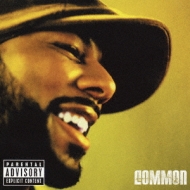
Review #11: Common

Common-Be
(GOOD/Geffen)
8 out of 10


Picture links to Common's website

The state of mainstream hip-hop today is that of a skydiver whose parachutes are defective. Most artists take bland beats, rudimentary songwriting skills, and an astronomical ego and try to churn out an album full knowing that it’ll sell like hotcakes as long as they brag about the right things. It’s causing the game to move at full speed with nowhere to go but down. It’s times like these when great albums are totally necessary to attempt to reverse this pattern. Lately, this album’s been the sixth from Chicago MC Lonnie Lynn a.k.a. Common Sense a.k.a. Common. Common’s fought misguided hip-hop before, in his legendary 1994 hit “I Used To Love H.E.R.” 11 years later, he’s teamed up with his buddy Kanye West, who’s produced and released on his slightly Christian label GOOD the album “Be”. The result is raw and real yet still positive and optimistic.

West’s production is actually not the really spectacular thing about this record. It has its high points, but in reality it’s nowhere as good as his work on various other tracks and his own debut, “The College Dropout”. As he’s been doing a lot lately, he samples like a very poor man’s Avalanches. If this and his latest single “Diamonds” are any indication, it doesn’t bode well for his upcoming “Late Registration”. But enough about the ultra-famous producer. Let us get to the superb MC spitting verses here.

In the same storytelling style as the aforementioned “I Used To Love H.E.R.”, Common is stunning on the short yet epic “Testify”, a startling poem about a court case gone surprisingly wrong. Common snarls each word as if the events described in the track directly affected his life. Kanye shines on the track too as he loops samples from Honey Cone’s “Innocent Til Proven Guilty” to create an amazing, catchy beat comprised almost entirely of vocal cuts. Another tasty little slice of ferocious ghetto politics is “The Corner”, a musical doctrine in defense of the various paths (legal and illegal) that impoverished urbanites take to make ends meet topped off by fiery spoken-word bits by The Last Poets. Also, as a much welcomed treat, a live cut of “The Food” from Chappelle’s Show was placed on the album. The performance in itself was the best musical piece ever featured on the program. Performed in a kitchen while Chappelle tooled around with various utensils, it was placed with the show’s most memorable moments. The addition of the song to the album is a reminder of how incredibly professional the performance was put together and how great the song itself was, especially when you consider that it was aired only on Comedy Central.

The most peculiar track on the album has to be “Go!”, where Common raps about his fantasies over a twinkling synth accompanied by singer-songwriter John Mayer. Before you cry mash-up, though, realize that Mayer’s only role on the track is to sing “Go!” several times. Since I’m a huge fan of Mayer’s work, however, and considering the subject matter of the song, I really think that the track could have benefited from more input from Mayer. It’s this slight sense of restriction of experimentation that somewhat hurts the album.

The biggest mistake on the album would probably have to be the album’s closer, “It’s Your World”. It’s 8.5 minutes long, most of which is comprised of unnecessary and tacky spoken-word input from a group of children and Common’s father. It is reassuring to know that inner-city children have dreams, but I’d rather not have learned this on a highly anticipated rap album. However, the track is supposedly broken into two parts. If so, the first part (the actual song) should have been placed on the album while the second (the spoken word), could have been placed as a b-side on a single or on a special edition.

The rest of the album is full of jams that are great although surprisingly unmemorable. Common’s skills never waver in terms of the verses, but the tracks are slightly diluted when West’s production lacks elements that really distinguish themselves from other tracks. Nevertheless, the entire album, from beginning to end, is tit-for-tat much better than anything chopped & screwed. Put another notch in Common’s belt and let’s hope stuff like this is remembered 10 years from now as a landmark as opposed to crunk-hop.

Key Tracks: “Testify”, “The Food (Live)”, “The Corner”

7.8.05

Review #10: Maximo Park

Maxïmo Park-A Certain Trigger
(Warp)
7 out of 10


Picture links to Maximo Park's website

Seldom have I met folks who are familiar with Maxïmo Park, the band that has surprised many in the know by getting signed to Warp Records; a label known for housing such leftfield electronic artists as Aphex Twin, Squarepusher, and Boards Of Canada. Just why is this shocking? The band has the dapper demeanor of Franz Ferdinand, the punkiness of The Futureheads, and maybe even a little bit of the smug lyrical wit of Interpol. Yep, it’s one of those bands. The art punk/dance rock outfit.

Not that I don’t enjoy this sort of thing. Maxïmo Park seem to be at the head of a wave of similar artists that tend to fare much better in Europe than in the States (see Editors, The Departure, Bloc Party). To be honest, I’m a bit of a sucker for the whole thing. Bands like this seem to pump out a good number of catchy songs fairly effortlessly, and Maxïmo Park are certainly not an exception. On their debut album, they deliver brief nuggets of foot-stomping, head-bobbing fun with only minimal amounts of lethargic songwriting.

The album’s star is undoubtedly new-wavey “The Coast Is Always Changing”. In a set that seems affixed on maintaining a perpetual stiffness, it stands out as the summery sing-along. It also utilizes a subtle theme of teen angst within its incredibly catchy chorus. I never thought a song would unashamedly provoke me to sing “I am young and I am lost”, but the fact of the matter is this one does. Less jubilant and more frantically irrational in nature, the UK chart hit “Apply Some Pressure” is equally as catchy. It’s in the same mindset as Franz’ “Take Me Out” in that it rambles on about troubling subject matter on top of a peppy discotheque backdrop.

Also worth checking out are a pair of maladjusted love letters, “Postcard Of A Painting” and “Now I’m All Over The Shop”, where frontman Paul Smith finds numerous ways to hate on a former loved one atop even more energetic instrumental work. All this plus various joyous moments elsewhere in the disc (The line “I’ll do graffiti if you sing to me in French” in “Graffiti”, a dash of electronica in “I Want You To Stay” and “Limassol”) make the album an enjoyable listen.

However, the album opens and closes in an aloof manner. The opening track, “Signal and Sign”, is nonsensical and noisy, and ends in Smith painfully howling. The final two tracks are even worse. “Acrobat” is a lump of spoken-word dreck about inadequacy, and “Kiss You Better” ends the album on an unnecessarily saccharine note. “A Certain Trigger” is also a subpar effort by producer Paul Epworth (You can see the impressive list of artists he’s worked with here). He often places emphasis on Smith’s voice when it’s as its roughest or sometimes even when Smith gets a tad lazy. The sound of the entire disc is very treble-oriented as well, perhaps to take weight off the shoulders of bassist Archis Tiku, who doesn’t necessarily spice up many of these tracks with fancy basslines.

All in all, Maxïmo Park’s debut is good enough to place them toe-to-toe with the post-rock-dance-art-pop-punk-something-or-other brass. But can they stay there? Perhaps we’ll know if the game will move ahead or behind them on October 4th, when Franz Ferdinand’s second album comes out.

Key Tracks: "The Coast Is Always Changing", "Apply Some Pressure", "Now I'm All Over The Shop", "Postcard of a Painting"

17.7.05

Review #9: Kaiser Chiefs

Kaiser Chiefs-“Employment”
(Universal)
7 out of 10


Picture links to the Kaiser Chiefs' website

The Kaiser Chiefs are a product of marketing. They, or their label, or their management, or whoever, will have you believe that the Kaisers are essentially Blur with a keyboardist named Peanut and a bit more a penchant for rioting; and those who obnoxiously praise them would also call them the rebirth of Britpop. Not so. Instead, the energetic quintet is simply a slightly British take on modern rock specially tuned to please people on both sides of the pond. It’s not American indie rock due to the fact that vocalist Ricky Wilson’s got a bit of an accent, and it’s not Britpop because it fails to frequently utilize all the things about English life that gave acts like Blur, Pulp, and Portishead that certain anglo-centric charm. At its best, what it does do is ride either a synthy wave of high-tempo electricity, a bona-fide catchiness, or maybe even both all the way to an album full of potential alt-rock radio hits.

For those in America who listen to alternative rock radio, you may know the Kaiser Chiefs from their smash hit “I Predict A Riot”. It’s the ideal single due to the fact that it summarizes the basic formula of the album: simple, sing-able chorus, roaring guitar, semi-repetitive, and small supplements of loud screaming from every band member simultaneously. It doesn’t sound like much, but darn is it fun!

Some songs go a tad bit above and beyond this formula, such as the clever wordplay and snappy one-liners in the sinfully awesome “Saturday Night”, which goes so far as to include a motorcycle intro courtesy of the honorable Blur guitarist Graham Coxon. Honors also go to the über-catchy “Oh My God”. All it takes is one listen and you’ll be singing “Oh my god I can’t believe it/ I’ve never been this far away from home.”

If it’s Britpop revivalism you’re looking for, check out “Modern Way” and “Time Honoured Tradition”. Both have elementary commentary reminiscent of your Parklifes and your Common Peoples. They don’t exactly mirror the significance of those notable predecessors, but they’re still really cool, especially for an obvious attempt at a carbon copy.

At the end of the day, I think I can say that the Kaiser Chiefs have potential. If they keep at it, they can fully develop their infectious sound and really create a name for themselves. As the Kaiser’s devout fans may say, “Hey, Blur’s debut was fairly patchy too.”

Key Tracks: "Saturday Night", "Oh My God", "Time Honoured Tradition", "Modern Way"

Notice 7-17-05

It's been quite a while since the world premiere of my Coldplay review, but my fans need not worry. Over the past few weeks I've worked up a nice queue of new music ready for reviewin'. Here's the current list of reviews you may see soon...drop me a message if you'd like me to consider anything else...Also, the Kaiser Chiefs review is almost finished, so look out for it!!!!

Kaiser Chiefs-Employment
Maximo Park-A Certain Trigger
Common-Be
White Stripes-Get Behind Me Satan
Shout Out Louds- Howl Howl Gaff Gaff
Aqueduct- I Sold Gold
Spoon-Gimme Fiction
System of A Down-Mesmerize